Build visuals by version and subsystem
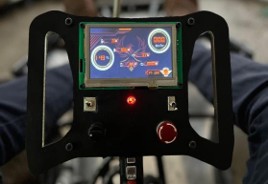
Custom steering wheel instrument cluster with live telemetry display and physical control integration.
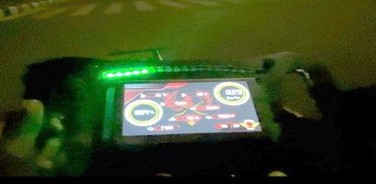
Night testing view of the steering-wheel display and driver-feedback light strip for fast speed awareness.
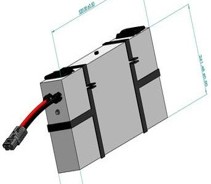
Battery-pack packaging study used while balancing performance, weight, and electrical layout constraints.
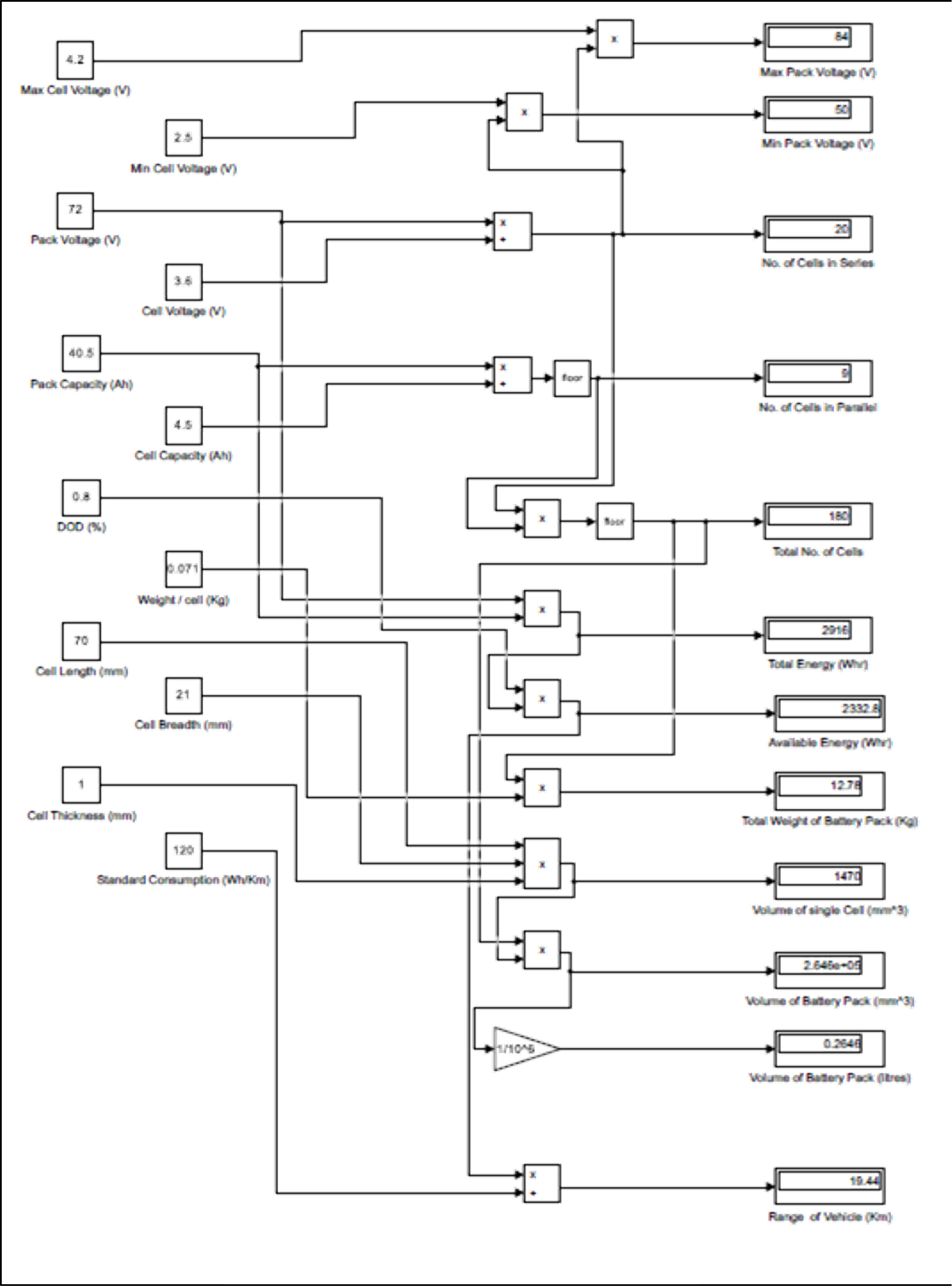
MATLAB and simulation-driven battery sizing workflow used to estimate pack architecture, weight, and usable energy.
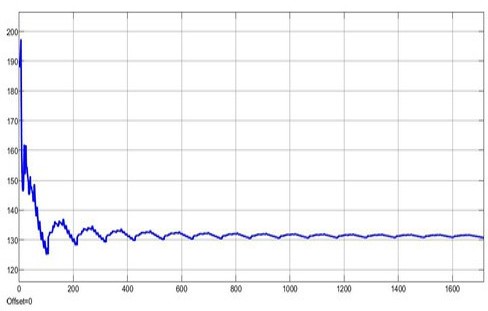
Consumption output used to validate energy usage and estimate the effective range envelope of the kart.
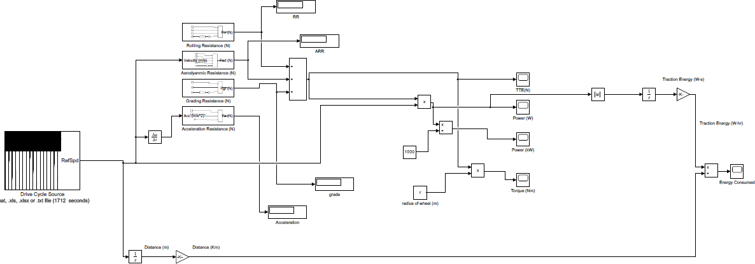
Powertrain simulation study used to understand drivetrain behavior and support performance-oriented system decisions.
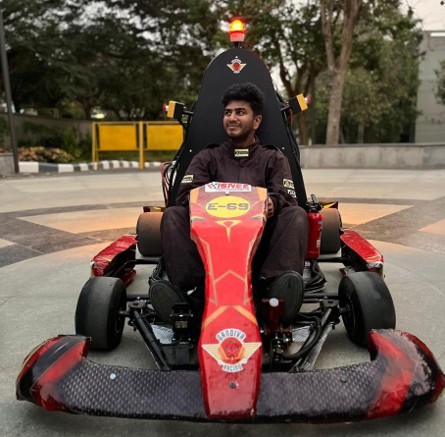
Competition-stage running image showing the second major iteration of the kart in motion.
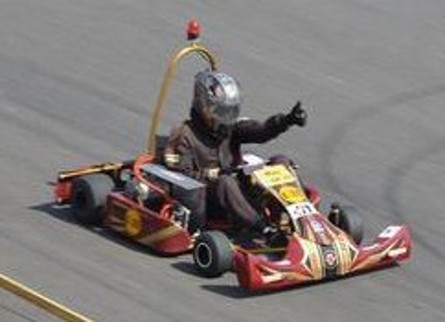
Front-facing view of the later Gandiva Racing kart revision after major packaging and integration improvements.
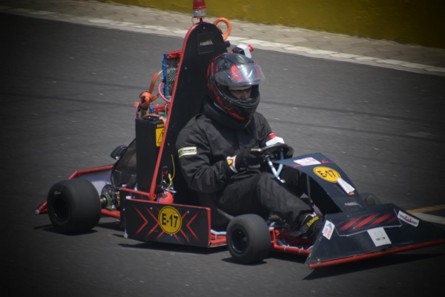
One of the earlier competition-stage visuals from the first iteration that shaped later redesign decisions.
Highlights
This project is the clearest example of how I like to work: start from a system-level problem, understand the constraints at every layer, then iterate until the hardware, firmware, and user experience all feel coherent.
The first season was brutally educational. Our kart failed technical inspection and finished last. Instead of treating that as a dead end, I used it as a baseline for the next two years. I helped redesign the electrical architecture, improved the wiring harness, cut unnecessary complexity, and kept tightening the relationship between software and hardware every season.
Iteration structure
The project evolved through three major versions:
V1 (2022-2023): first season, heavy learning, weak technical inspection result, strong baseline for future redesign.V2 (2023-2024): major improvement cycle with stronger systems integration, telemetry refinement, and championship-winning execution.V3 (2024-2025): the most mature version, with tighter packaging, battery-pack optimization, improved speed, and stronger overall vehicle coherence.
What I owned technically
I designed the full EV schematics, worked on the integrated wiring harness, and developed the steering wheel electronics around an STM32F446RE. That firmware handled multiple communication patterns:
CAN 2.0Bfor battery-management and controller telemetrySPIfor SD logging and LED strip controlUARTfor DWIN display communication
The software had to balance visibility, responsiveness, and bandwidth. I implemented message handling that could deal with both request-response style exchanges and continuous telemetry broadcasts while keeping the display useful for the driver.
The part I am most proud of
The steering wheel light strip was my own driver-feedback idea. During race conditions, the instrument cluster alone was not enough for fast awareness. I used a programmable LED strip on top of the wheel to expose speed-context cues more directly to the driver. It was simple in concept, but high-value in practice because it reduced cognitive load in motion.
Why it matters
This project was never just about making individual subsystems work. It was about making the whole vehicle more understandable, lighter, faster, and more dependable. That meant linking firmware decisions to aerodynamics work, battery sizing, packaging, and real competition outcomes. It is the project that most fully represents me as an engineer.